
Do Wider Tires Improve Grip? The Real-World Tradeoffs (Wet, Snow, MPG, Road Noise)
Posted by WheelSetGo on 12th Jan 2026
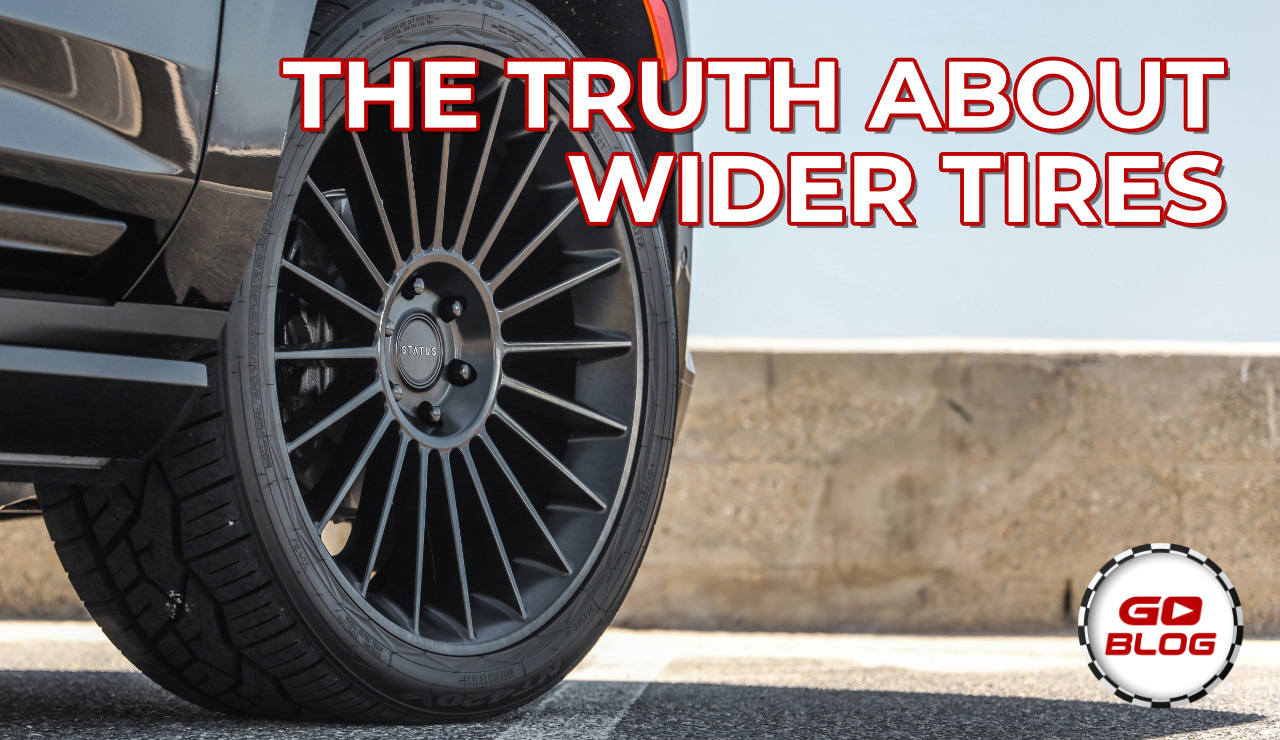
Do Wider Tires Improve Grip? The Real-World Tradeoffs (Wet, Snow, MPG, Road Noise)
Wider tires look tougher, fill out the wheel wells, and on dry pavement they can feel more planted. So it’s natural to ask: Do wider tires actually improve grip?
Sometimes they do—especially in dry conditions. But wider isn’t a universal upgrade. The real-world tradeoffs show up fast in rain, snow, fuel economy, and road noise.
If you want help choosing the right width for your vehicle and goals, Call 320-247-6160 for expert help. All orders ship free and financing is available at checkout.
The quick answer
- Dry roads: wider tires often improve cornering confidence and stability (when you’re comparing similar tire types).
- Rain: wider tires can be more hydroplaning-sensitive in standing water.
- Snow: wider tires can “float” more; narrower tires often feel more sure-footed.
- MPG + noise: going wider can increase rolling resistance and noise, depending on the setup.
So the real question is: Where do you drive most—and what do you want to improve?
What “more grip” actually means (simple version)
Grip can mean:
- Acceleration grip (getting moving without spinning)
- Braking grip (stopping distance)
- Cornering grip (how confident it feels turning)
A wider tire may help one of these, but not necessarily all of them in every season.
Dry pavement: where wider tires usually feel like an upgrade
On dry roads, wider tires can bring:
- a more planted feel in corners
- improved stability at speed
- better traction on higher-power vehicles
This is why performance-focused setups often go wider—especially when the goal is sharper handling and a more locked-in feel.
Wet roads: the big tradeoff (hydroplaning)
Rain changes the game because the tire has to move water out of the way to keep rubber on pavement. If water can’t escape fast enough, the tire rides on top of it—hydroplaning.
What drivers often notice with wider tires in heavy rain:
- they can feel more “floaty” in standing water
- they may require more caution at highway speeds during storms
Practical takeaway: If your area gets frequent heavy rain, don’t choose width based on looks alone—think about wet confidence at speed.
Snow and ice: why narrower often feels better
In snow
A narrower tire often helps because it can:
- cut through snow more effectively
- feel less like it’s pushing a wide “plow” in deeper snow
- deliver a more predictable steering feel on packed roads
A wider tire can feel like it’s riding higher on the snow, which can reduce that connected, controlled feeling.
On ice
Ice traction is mostly about how the rubber behaves in cold temperatures and how well the tread creates bite under braking and turning. Width alone usually won’t solve icy intersections.
Practical takeaway: For a dedicated winter setup, many drivers go slightly narrower for better snow feel and more control.
MPG and efficiency: what usually changes when you go wider
Wider setups can reduce efficiency because they may add:
- rolling resistance (more energy required to keep the tire moving)
- weight (varies by tire model and construction)
- small increases in drag at highway speed
You might notice it more on long commutes, road trips, hybrids, and EVs—where small changes add up.
Road noise and ride comfort: what you’ll notice day-to-day
Wider tires can be louder and firmer, especially if the setup shifts toward a more performance-oriented feel.
Common driver feedback after going wider:
- more road texture and hum on certain pavement
- a slightly firmer ride over sharp bumps
- a more “connected” feel (good for some drivers, annoying for others)
Steering feel: sharper… or more “tracking” on grooves
Wider tires can improve turn-in and stability, but they can also:
- follow ruts and grooves more (tramlining)
- feel heavier at the steering wheel
- be more sensitive to alignment
If your roads are heavily grooved or patched, this is one of the biggest “surprise” changes people notice.
Fitment reality check (don’t skip this part)
Before going wider, make sure the setup physically works:
- clearance to suspension and fender liners
- wheel width that matches the tire
- offset that doesn’t push the tire into rubbing territory
- overall diameter that doesn’t create clearance or speedometer issues
This is also why many drivers like a mounted and balanced wheel and tire package—it simplifies the process and avoids common mismatch headaches.
Quick decision guide: should you go wider?
Go wider if…
- you want a more planted dry-road feel
- you care most about cornering confidence and stability
- you’re willing to accept potential rain/snow and comfort tradeoffs
Stay near stock width if…
- you drive in heavy rain often
- you want the quietest, smoothest daily driver
- efficiency matters (MPG or EV range)
Consider narrower (especially for winter) if…
- you see regular snow and packed roads
- you want more predictable winter steering feel
- you’re building a dedicated winter setup
The bottom line
Wider tires can improve grip—but mostly where dry handling is the priority. In the real world, going wider can bring tradeoffs in rain, snow feel, efficiency, and road noise.
If you tell us what you drive and what your roads are like, we can help you choose a width that fits your goals without creating fitment headaches. Call 320-247-6160 for expert help. All orders ship free and financing is available at checkout.